

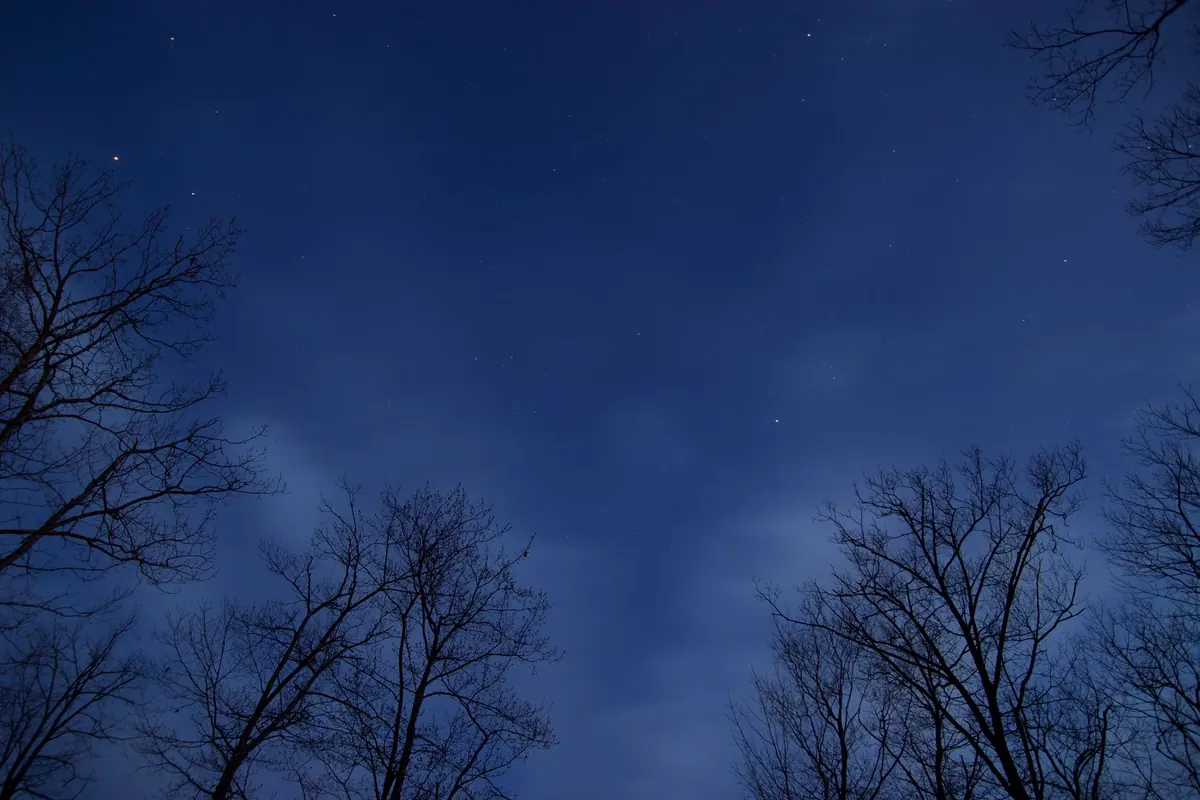
The first properly cold, clear night of winter is the best observing opportunity most of us get all year. It arrives before teatime and lasts until morning. It is also the night when everything goes wrong. Eyepieces fog, fingers stop working, the telescope never seems to settle, and by nine o'clock you are carrying a dewed tube back indoors wondering why you bothered. Almost none of these problems are really about astronomy. They are about cold, moisture and planning, and they are all fixable with kit you probably already own.
Dew is the enemy, and it wins by default
Dew forms on anything that loses heat to a clear sky faster than the surrounding air can replace it. A telescope's front lens or corrector plate is an excellent radiator, which is why it mists over while the grass beside you stays dry. The finder scope goes first, then the eyepiece, then the main optics. Once the glass is wet, the view is soft and dim and no amount of refocusing will help.
- Fit a dew shield. Most scopes take a screw-on or slip-on shield; a roll of camping mat and a rubber band will do for a small refractor. It slows the loss of heat and blocks stray light.
- Add gentle heat. A dew heater band around the objective, running from a 12V supply or power bank, keeps the glass a degree or two above the dew point. Gentle is the word: there is no need to warm the optics.
- Rotate your eyepieces. Keep two or three in an inside pocket and swap them as they mist. A pocket-warm eyepiece will stay clear for a surprising length of time.
- Stop breathing on the glass. Line your eye up from the side rather than leaning over the eyepiece, and keep your nose clear of the barrel. Warm breath condenses instantly in cold air.
If something does fog up, resist the urge to wipe it with a cloth or your sleeve. You will smear the coating and risk scratching it. Cap the scope, take it indoors and let it warm slowly in its case. Never use a hairdryer or a hot car heater on cold glass; the sudden change in temperature is far more damaging than a little dew.
Dress for standing still, not for the walk to the car
Observing is a stationary activity, which makes it a completely different problem from a winter walk. You will feel colder than the forecast suggests, because you are not generating any heat. Layers that trap air and can be adjusted beat one thick coat every time.
- Base layer: synthetic or merino wool. Cotton soaks up sweat and then chills you.
- Mid layer: fleece or light down for insulation.
- Outer layer: windproof and waterproof. Wind strips heat far faster than still cold air.
- Head and neck: a hat, plus a buff or scarf you can pull over your face when you are hunting for faint objects.
- Hands: thin liner gloves inside mittens that flip open, so you can handle small eyepieces without exposing bare skin.
- Feet: insulated boots, socks that are warm but not tight, and a foam mat or a sheet of cardboard underfoot. The ground pulls heat out through the soles.
Sit down if you can. A folding stool or a simple observing chair is worth its weight because it keeps you steady and stops you tensing against the cold. Take a flask of tea or soup, and eat something. Alcohol is a poor companion on a freezing night: it makes you feel warmer while your body loses heat faster, so save the whisky for the kitchen. If you have a circulation problem or another condition affected by cold, take advice from a medical professional before planning long sessions.
Plan a session you can actually finish
The classic mistake is the twenty-object list. You find the first target, take fifteen minutes over it, then spend twenty minutes star-hopping to the second while your fingers stiffen. By the fourth you are packing up, and the objects you really wanted to see never get a look in.
Build two short lists instead. The core list holds four or five bright, easy targets that need about forty minutes altogether: the Orion Nebula, the Pleiades, the Andromeda galaxy, a bright planet if one is well placed, and a showpiece double star. The optional list is for when the night is going well. Keep both on paper rather than on a phone, so you are not ruining your dark adaptation every time you check the screen.
Plan for the Moon as well. If it is up, switch to double stars, open clusters and lunar craters, and save the faint galaxies for the dark half of the month. A cloud forecast is a rough guide, not a promise; if it looks marginal, set up anyway and treat a clear hour as a bonus.
Give the telescope time to cool, and bring it in slowly
A scope taken straight from a warm room into a cold garden will give mushy views at high power for the first half hour. The bigger the mirror, the longer it takes. If you can store the telescope in an unheated shed or garage, do so, and check it for damp regularly. Otherwise, set it outside before you get dressed and let it settle while you fetch your gloves.
Do not judge the optics until it has cooled, and do not start adjusting collimation while it is still warm, because you will be correcting a problem that is about to disappear. Coming back in, cap everything, close the case and let the whole lot warm up gradually. A cold mirror in a warm room will attract condensation inside the tube, which is a much greater nuisance than dew on the outside.
Batteries and electronics hate the cold
Every type of cell loses capacity as the temperature drops, so a power bank that runs a mount all evening in October may give up after an hour in January. Keep spares in an inside pocket, not in the accessory case. Cables go stiff and brittle, and handset screens slow down or fade. If your mount needs aligning, do it once everything has settled rather than fighting a tracking error caused by a cold motor and a half-flat battery. Wipe condensation off screens with a microfibre cloth, and never leave a laptop or handset outside uncovered.
Don't fight the seeing with magnification
Winter often brings steady air, but it also brings fast-moving weather systems and big temperature differences between the ground and the upper atmosphere. On those nights the image boils and shimmers, and no eyepiece will fix it. Start at low power, work up gradually and stop when the view stops improving. Backing off from 200x to 80x often reveals more detail, not less.
When the seeing is poor, switch targets rather than struggling. Wide doubles, bright open clusters and the Moon tolerate indifferent conditions well. Sketching what you see is another good winter habit: it forces you to look for several minutes instead of several seconds, and it means a short session still produces something worth keeping.
A ten-minute routine that saves the night
- Check the forecast, choose your core targets and write them down before you open the door.
- Put the telescope outside to cool with the dew shield fitted and the cap off.
- Dress completely indoors, including hat, gloves and boots, before you step out.
- Set up so you can sit, with a mat under your feet and a flask within reach.
- Begin at low power and only increase magnification when the image justifies it.
- Cap everything before going in, then let the scope warm up slowly in its case.
None of this is complicated, and most of it costs nothing. Get the small things right and winter stops being a test of endurance. It becomes what it should be: the longest, darkest and most rewarding stretch of the observing year, with Orion climbing in the south-east and a flask still warm at midnight.
Photo: Free Nature Stock / Pexels